|
|
Philtral Malrotation |
|
|---|

|
|
|
Figure 3 demonstrates a forme fruste the mildest expression, of a cleft lip: a subtle notch in the white roll, on the left side of the philtrum, with no other lip or nose deformity. This lip belongs to the mother of a patient with an overt cleft, seen in the next picture, fig. 4B. |

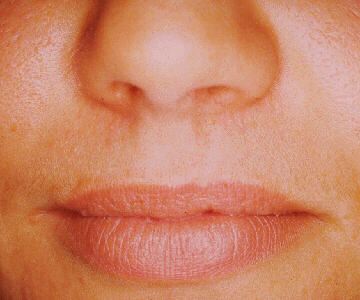
Fig. 3 |
|
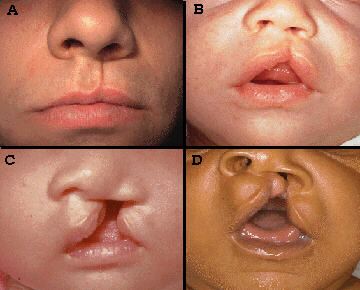
As clefts increase in extent, one sees a
progressive upward malrotation of the philtrum. From Fig. 4A
to 4D, this phenomenon is demonstrated, with Fig. 4D showing
45 degrees of malrotation. This anatomic unit, although
abnormal in position, is present in all unilateral cleft
lips, from mild to severe. Early surgeons did not recognize
that the philtrum existed. They used operations that
discarded important tissue, thus deforming the lip; they
closed the gap but failed to produce anything close to a
normal lip. |
|
Fig. 4 |
|
Veau3 in France,was the first to recognize that cupid's bow is present, and must be preserved, in unilateral cleft lip repairs. Because Veau's description of his repair was ephemeral, it failed to win advocates. In the United States, Tennison4 was the first to note the importance of preserving cupid's bow. However, it was Millard5 who first noted the presence of the philtral unit in unilateral clefts.
|
|
|